The Original Script: Crafting Timeless Elegance
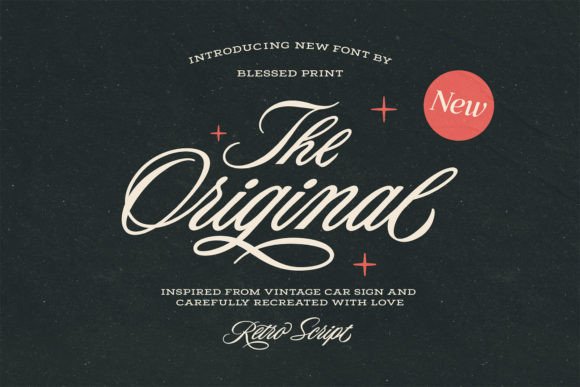
In a digital landscape often dominated by clean, geometric sans-serif typefaces, there’s a certain magnetic pull to designs that feel human, historical, and undeniably authentic. If you are looking to infuse your projects with the warmth of traditional American handwriting, few tools are as effective as a well-crafted vintage script. This is where The Original Script enters the conversation. It isn’t merely a set of vectorized letters; it is a meticulously handcrafted premium font that channels the sophisticated elegance of a bygone era, specifically drawing inspiration from the iconic "Town Car" inscription found on classic Lincoln retro automobiles.
A Typeface with a Story to Tell
When we talk about The Original Script, we are discussing a typeface with a distinct personality. It captures the essence of mid-century American luxury. The visual characteristics are defined by fluid, confident strokes that mimic the pressure and rhythm of a skilled hand holding a broad-nibbed pen. Unlike many modern script fonts that can feel sterile or overly digitized, this typeface retains the grit and texture of traditional lettering. It features a plethora of decorative swashes and ligatures that allow designers to customize the text, ensuring that the typography feels unique to the specific layout.
The overall appeal lies in its ability to bridge the gap between nostalgia and high-end branding. It doesn't scream for attention with jagged edges or exaggerated loops; instead, it commands respect through its balance and flow. It is a creative font that feels expensive, making it an ideal choice for projects where brand perception and trust are paramount. Whether you are a brand strategist developing a visual identity for a heritage brand or a graphic designer working on editorial design, this typeface offers a level of sophistication that standard sans serif font options simply cannot replicate.
Strategic Applications for Modern Creators
Understanding where to deploy a display font like The Original Script is key to maximizing its impact. Because it is a vintage typeface, it shines brightest in contexts where storytelling and emotion are central to the message. It is not designed for setting long blocks of body copy; rather, it is a tool for headlines, accents, and focal points.
For logo design, this font is a powerhouse. It works exceptionally well for boutique businesses, upscale barbershops, heritage clothing lines, and artisanal food brands. The "Town Car" inspiration gives it an automotive edge, making it particularly suitable for mechanic shops, vintage restoration services, or luxury transport companies looking to evoke a sense of classic reliability. Furthermore, in packaging design, the font helps products stand out on shelves by suggesting that the contents are crafted with care and tradition, much like the font itself.
Beyond commercial use, the versatility of this script font extends to personal and stationery projects. It is an excellent choice for wedding invitations, save-the-dates, and letterpress addresses. The handcrafted nature of the glyphs ensures that printed materials have a tactile, human quality. For content creators and marketers, it can be a secret weapon for social media graphics. A quote or a call-to-action set in The Original Script can stop the scroll, adding a layer of authenticity that resonates with audiences tired of generic, algorithm-generated aesthetics.
Mastering the Pairing and Hierarchy
One of the most common pitfalls in typography is using a decorative script without considering the supporting cast. The Original Script is a bold statement, and to maintain readability and visual hierarchy, it requires careful pairing. A general rule of thumb for font pairing is to contrast styles. Because this typeface is ornate and high-contrast, it pairs beautifully with a clean, geometric sans serif font or a sturdy serif font with low contrast.
Imagine a business card where the brand name is set in The Original Script, conveying prestige and history, while the contact details are set in a simple, spaced-out sans-serif like Montserrat or Helvetica. This creates a hierarchy that guides the eye naturally. The script draws you in, and the sans-serif provides the necessary information without competing for attention. This balance is crucial in web design as well, where screen resolutions can sometimes blur the fine details of intricate scripts. Using the font for H1 headers or pull quotes can add personality to a blog layout without sacrificing the mobile user experience.
Practical Considerations for Implementation
Before integrating The Original Script into your workflow, it is wise to evaluate the project fit and the specific technical assets included with the font. As a premium font, it likely comes with a commercial license, which is essential for entrepreneurs and publishers using the typeface in products for sale. Always review the licensing terms to ensure you are covered for print-on-demand or digital distribution.
When testing the font, take time to explore the swashes and alternate characters. A common mistake is using the default settings for every letter. By toggling stylistic alternates, you can prevent awkward connections between letters and create a more organic flow. For instance, if you are designing a vintage heading for a poster, swapping out a standard "T" for a version with an extended crossbar can completely change the dynamic of the composition.
Finally, consider the medium. If you are using The Original Script for letterpress or embossing, ensure the stroke weight is heavy enough to hold up on textured paper. If the application is digital design, test the color contrast against various backgrounds. A dark, rich font like this often looks best on lighter, muted backgrounds or textured overlays that mimic aged paper, reinforcing the retro aesthetic.
Ultimately, The Original Script is more than just a design asset; it is a bridge to the past. For designers, crafters, and business owners, it offers a way to communicate value, tradition, and authenticity in a single glance. By leveraging its unique characteristics and applying it thoughtfully, you can elevate your projects from ordinary to unforgettable.